5 Minute Read
This blog may contain affiliate links and I may earn commission on some of the items you choose to buy, at no additional cost to you.
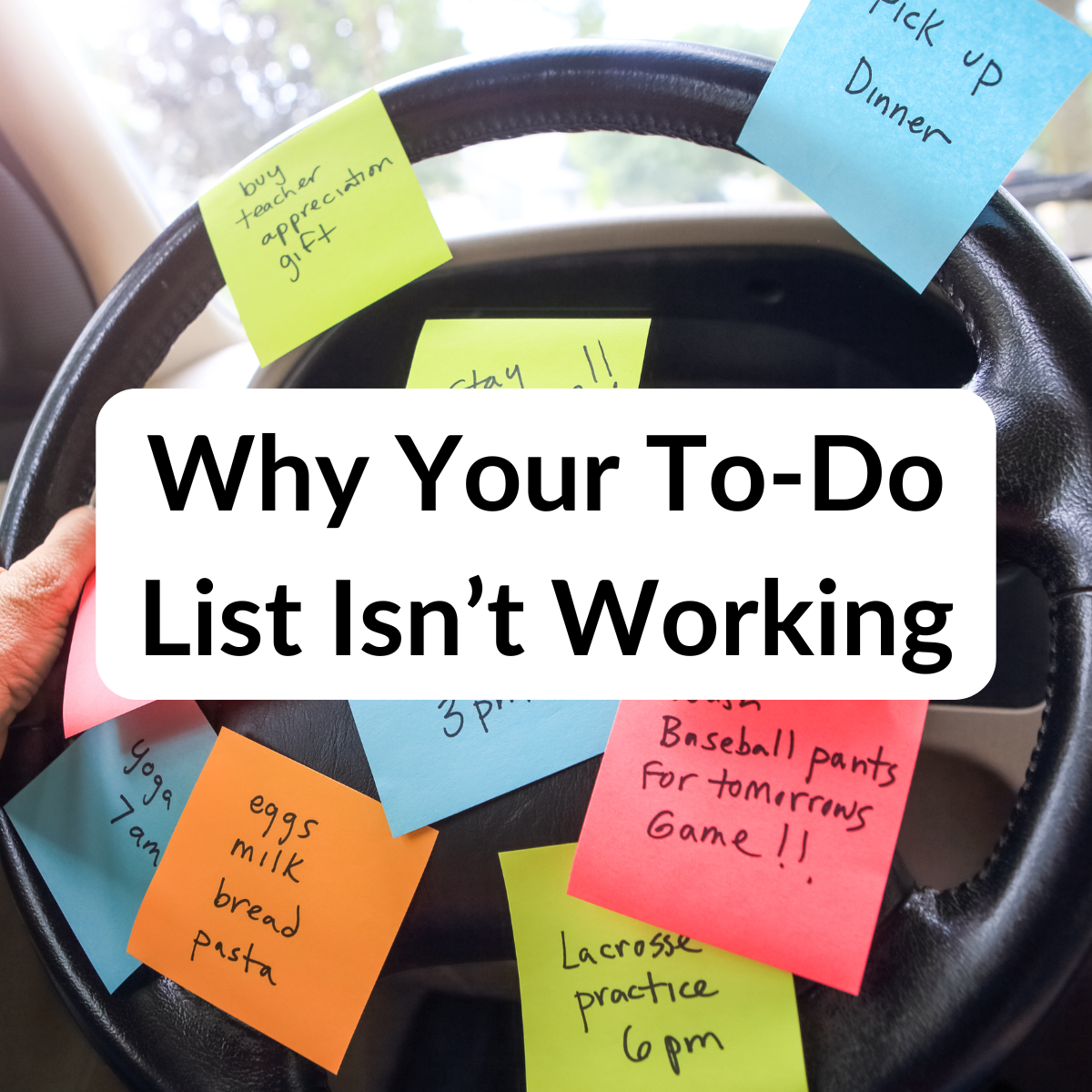
Welcome to my ‘speed read’ series. If your to-do list keeps getting longer, but your sense of momentum keeps shrinking, this isn’t a motivation problem. That’s right, it isn’t you, it’s your system. Traditional to-do lists weren’t designed for modern homes full of social calendars for our kids, invisible labor, or constant cognitive interruptions. Who can relate to their brain not functioning like it did pre-kid brain? I know mine sure doesn’t. Traditional to-do lists track tasks, not the mental load or the entire picture of what it is to complete that task. This is why they quietly make capable moms feel behind.
Grab a coffee, set aside 5 minutes, and let me show you what your to-do list is missing and what to use instead when your brain is already at max capacity.
The Quiet Pattern Most Moms Live In
This is what usually happens:
- You write everything down so you won’t forget
- You knock out the small tasks first
- The big ones roll over to tomorrow
- Tomorrow gets its own list
- Rinse and repeat
From the outside, you look productive. Checking things off and adding and checking off. But on the inside, you feel like you’re always chasing something you cant quite catch and that dopamine rush from the low hanging fruit wears off quickly.
That feeling isn’t a stamina problem. It’s structural overload.
Why To-Do Lists Break Down in Real Homes
To-do lists fail not because they’re useless, but because they’re incomplete tools for the type of work you’re actually doing.
Here’s what most lists don’t account for:
- Cognitive load (how much mental power and time goes into planning this task)
- Task dependency (what must happen before something else can happen)
- Energy timing (are you well rested? was work exhausting today?)
- Repeating labor (vacuuming on the list daily)
- Other people’s capacity (who is participating in the to-do list and do they have enough time and energy to do their part?)
They treat every task as if it carries the same weight. They assume equal effort, equal friction, and equal brain space.
None of that is true in real family life.
The Real Issue Isn’t Your List, It’s the Way You’re Using It
Most moms use their to-do lists as a storage system:
“I’ll just write it down so I can hold it all.”
But your list was never meant to be a warehouse.
It was meant to be a selection tool.
When everything lives on one flat list:
- Nothing is clearly prioritized
- Repeating tasks compete with one off tasks
- Urgent or easy crowds out important
- Your brain never gets closure or fair distribution of tasks
The list grows. Your nervous system never resets.
What to Use Instead of a Flat To-Do List
You don’t need more discipline.
You need separation of function.
Here’s the simplest structure that actually works in overloaded homes:
- A Backlog (All Tasks That Exist)
- This is where ideas, future tasks, and “someday” items live
- They are stored, not scheduled
- A Weekly Commit List (What You, as A Family, Actually Approved)
- This is your real workload for the week
- If it’s not here, it’s not a promise or expectation
- Your Daily Execution List (A Realistic Estimate of Tasks)
- This is where action lives.
- Not Ambition. Not Guilt. Actual execution
- This is what i’m going to accomplish today based on today’s bandwidth
Why This Immediately Reduces the Feeling of, “I’m Behind”
When you separate storage from commitment:
- You stop renegotiating your capacity every hour
- You stop carrying future work in your nervous system
- You stop measuring your worth by unfinished tasks
- You start seeing completion again
- You see group participation with less repetative hounding or nagging
Progress becomes visible.
Completion becomes frequent.
Knowledge on each task becomes shared.
Your brain finally gets clear feedback.
What This Will Feel Like at First
This shift is subtle, but powerful. Honesty…it feels a little strange for the first few days:
- You may feel like you’re “doing less”
- You may feel uneasy leaving tasks in the backlog (your master list of all tasks)
- You may want to keep promoting things to your daily list (vital that you do not)
- You may feel like your home has become a business (but you’ll realize there are some similarities when you break down managing a home and coporate america)
That discomfort is normal.
It’s the sound of your system changing for the better.
Where This Usually Breaks
Here are the most common failure points and how to avoid them:
- Daily list keeps growing past maximum limit -> You’ve turned it back into a storage unit
- Weekly list becomes unrealistic -> You’re still planning with hope instead of capacity
- Everything feels urgent -> That’s a signal to pause, not accelerate
- You keep rewriting the same tasks -> That task belongs in a repeating routine, not a daily list. Meaning, the owner of a daily task will own that task every day for an entire week (how we run our ‘sprints’ / household ownership)
Again, this isn’t about willpower, it’s about function. It’s OK if you don’t nail it perfectly the first week. Make adjustments and carry those lessons into the next week. It’s progression, not perfection. It takes time to get into a new routine.
Your Decision This Week
Stop measuring your productivity by how long your list is.
Instead:
- Create one backlog (master list of all tasks current and seasonal)
- Choose 2-5 daily tasks per person (based on availability, priority and effort to complete)
- Approve a weekly commit list
- Let unfinished tasks stay where they belong
- Set a 10 minute time where everyone can come together and quickly state what they are doing today, what they did yesterday and if they have any issues. Remember, this is just task based, not what they did in an entire day like eat meals and go to school.
That one shift will reduce more friction than any new planner ever will.
A to-do list should help you decide, not silently convince you that you’re failing.
This is one of the foundational shifts in my Agile Home Management Approach.
Next Read
learn more about loops (repeating lists): https://agilemomlife.blog/stop-resetting-your-entire-house-at-once-focus-on-this-instead/